Strategy #2: Using model words for readings
This strategy is more memory intensive and requires a more larger vocabulary, but it's a powerful one that can help you learn kanji readings in context. Memorizing all of a kanji's readings in isolation can be overwhelming, especially for kanji like 生 with over ten readings. Instead of memorizing readings in isolation, you can learn a kanji's model words—words that function as perfect examples of a kanji's readings—then work backwards to remember its readings. Additionally, your textbook often provides these model words for you.
For this strategy, it's key to focus on learning relevant, common words over learning every possible word for every possible reading. Some readings are uncommon, and you may not need those readings when first learning a kanji.
Model words in action
Let's look at 目, the kanji for eye. Its kunyomi readings are め and ま. Its onyomi readings are もく and ぼく. Let's look at its most common readings using some model words.
- 目
- Reading: め
- Meaning: eye
- 目的
- Reading: もくてき
- Meaning: objective, goal
- 面目
- Reading: めんぼく
- Meaning: appearance, face
The kunyomi reading ま is less commonly used than め. This reading is usually when 目 replaces a another kanji, like 目差し being an alternative form of 眼差し (まなざし). In practicality, め,
Finding resources
Many kanji dictionaries show the readings of a each listed kanji, so they double as both a reading lookup tool and a tool to find words that contain a certain kanji.
To find dictionaries online, search for "Japanese dictionary" in English or 辞書 in Japanese. Jisho is a great resource for this.
Exercise: Mapping kanji and their model words
For this exercise, you'll create a mind map to visualize a kanji's readings in context. You can later incorporate the information from your mind map into other study tools like flashcards to practice recognition and recall.
You'll need
- Writing materials (pen and paper or digital equivalent)
- Japanese dictionary (online or offline)
Steps
1. Select your kanji
Select and write down one kanji whose readings you want to memorize.

2. Look up the kanji's readings using a Japanese dictionary
Using a Japanese dictionary (or the Genki textbook if your class uses it), look up the kunyomi and onyomi readings for your selected kanji. Though, keep in mind that Genki textbooks don't always include a complete list of readings for each kanji.
Writing down these readings for future steps may be helpful.
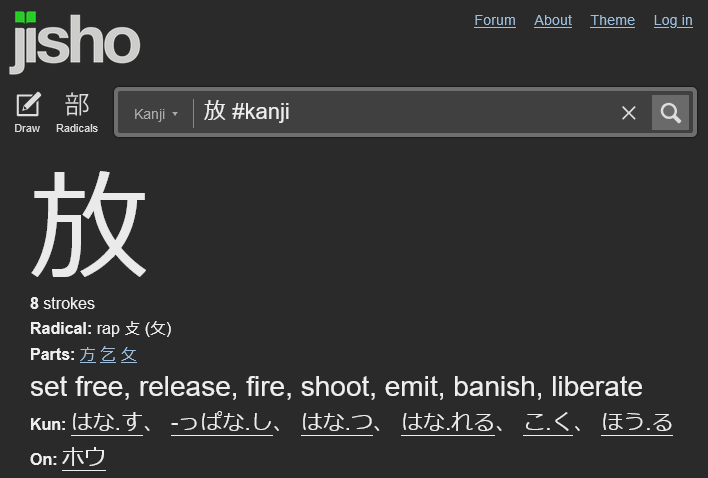
3. Search for words containing the kanji
Using your textbook or a dictionary, search for words that use your selected kanji.
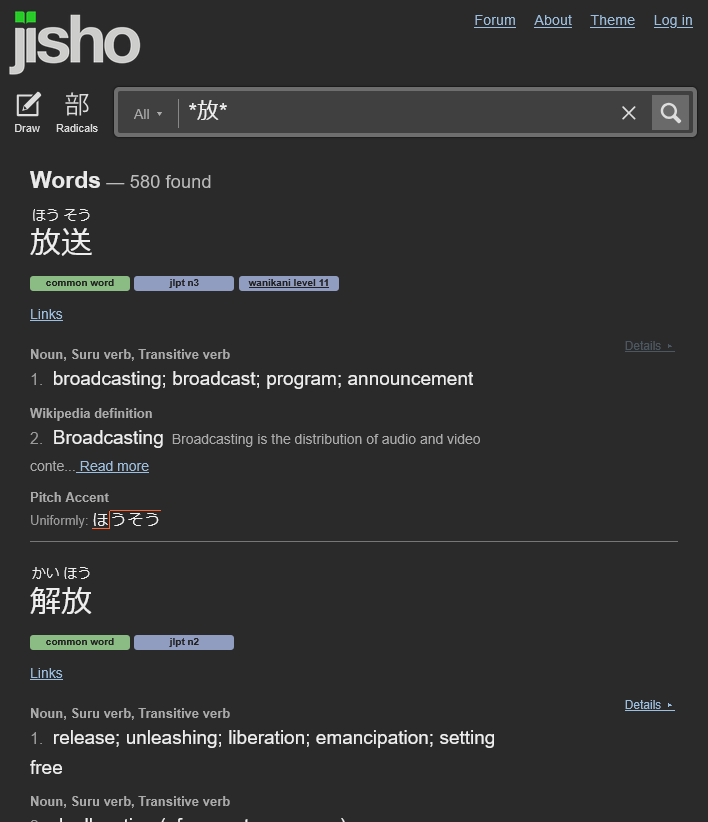
4. Select two to five model words with different readings
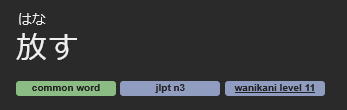
Using the readings you looked up from earlier, select words with different readings that are commonly used or memorable to you.
(It may even be useful to think about making model sentences for those words too. The more mental associations a thing has, the more you'll remember it.)
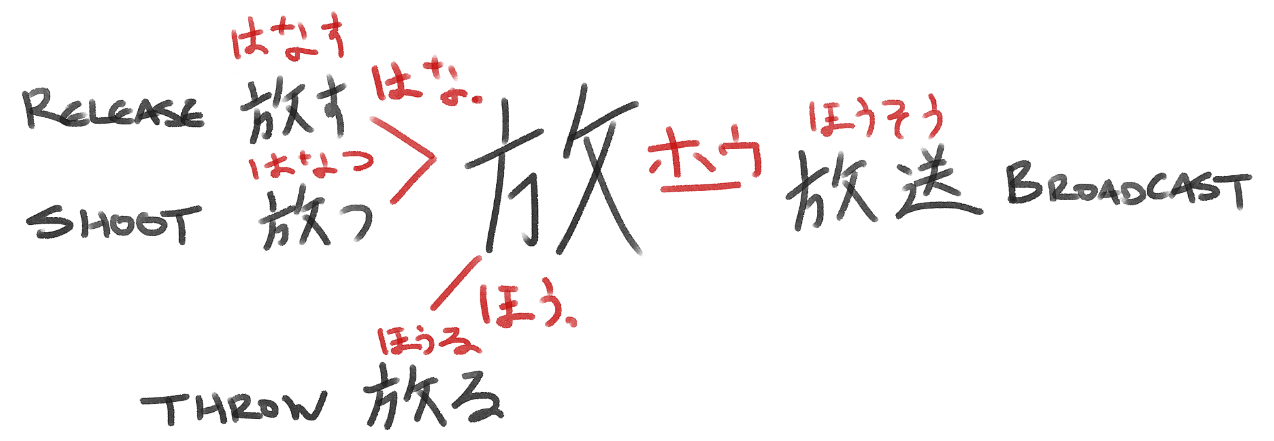
5. Create your mind map
With your chosen kanji at the center, write your selected model words around it. Then, use the readings you looked up earlier to connect the kanji to its model words.
When studying using mind maps, keep track of the patterns you come across with how certain readings may be used more frequently in compound kanji words or in verbs with okurigana.1
1. Okurigana refers to the kana that follow a kanji stem in a word. For example, in 行く, く is the okurigana that follows the kanji 行 to form the dictionary form of the verb for "go."