Assessment information
In your Japanese courses, you'll regularly take kanji quizzes and kanji tests where you'll be tested on kanji in context.
You'll encounter questions like these:
Fill in the kanji
- Q: _く (いく) → A: 行く
- Q: _事 (ぎょうじ) → A: 行事
Write the reading
- Q: 行く → A: いく
- Q: 行事 → A: ぎょうじ
Write the whole word
- Q: いく (go) → A: 行く
- Q: event → A: 行事
These types of questions don't explicitly ask you to just write a kanji's onyomi or kunyomi readings1 or meanings, but you'll still need to know those things.
To help you prepare for kanji assessments, the strategies and exercises in this guide are designed to help you study for these types of questions.
Which kanji should you study?
Your instructor will specify the kanji to study for each assessment. Typically, the kanji you'll be tested on corresponds to a specific textbook and workbook lesson (if you're using a workbook).
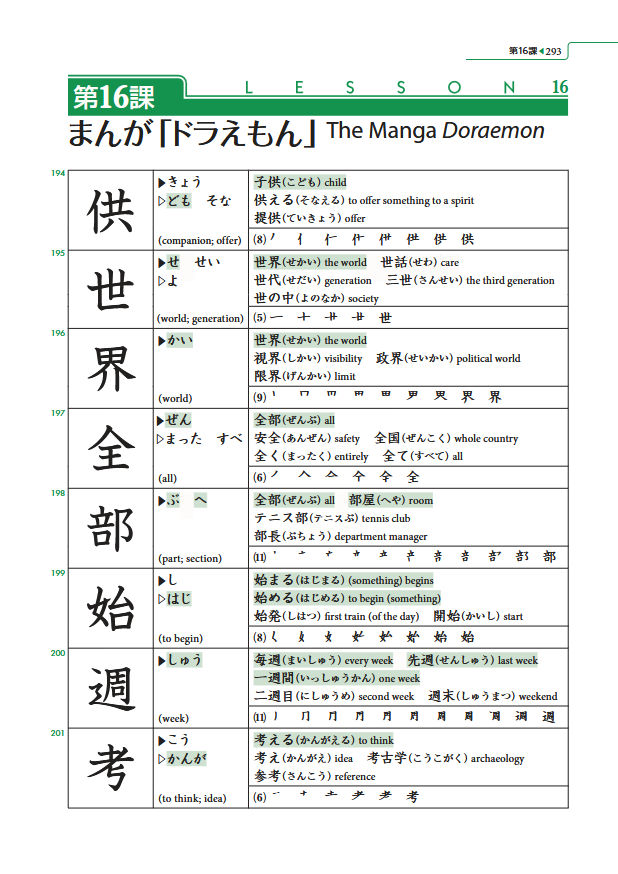
For Genki users
Pay attention to the Reading and Writing Section (読み書き編) in the back of the textbook and its correspending lesson in the workbook. Your textbook lists example words for each kanji, and assessments often use those same words.
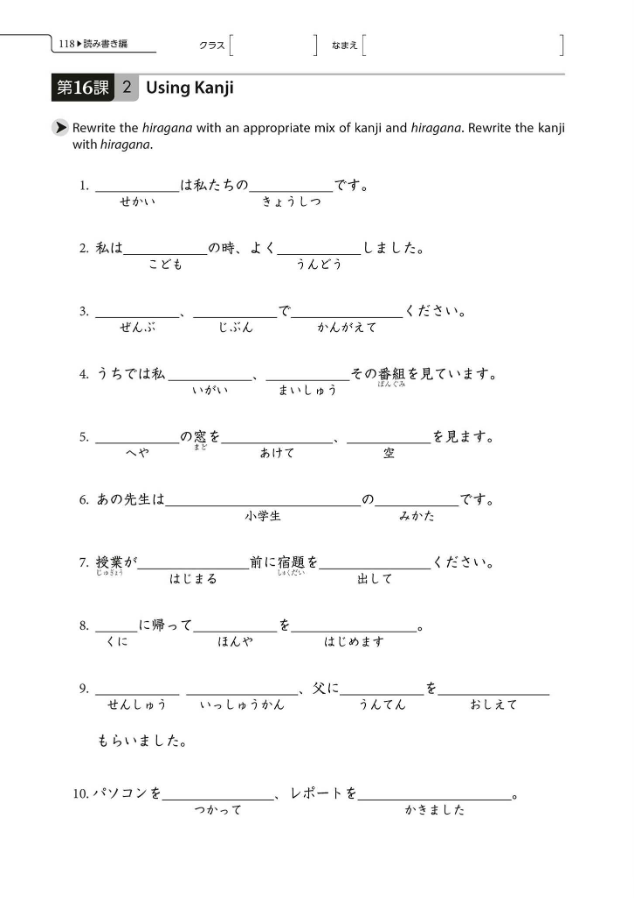
Your workbook's Using Kanji pages show each lesson's kanji use in context, and those words often show up on kanji assessments as well.
For Tobira users
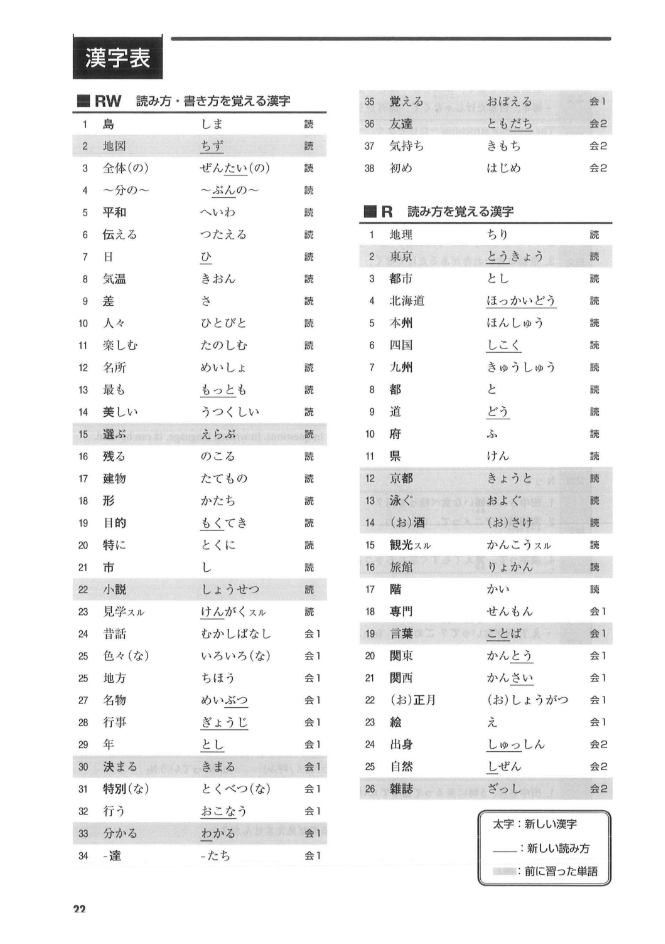
The Kanji Lists (漢字表) at the end of each lesson are your primary kanji resource. Pay attention to the words marked "RW" (words students should be able to read and write) and words marked "R" (words students should be able to read) to guide your studies.
1. Kunyomi and onyomi refer to the Japanese and Chinese ways of reading a kanji character. The kunyomi reading is the native Japanese word assigned to a Chinese character, and the onyomi reading is the reading derived from the character's original Chinese pronunciation. Some kanji may have multiple kunyomi readings, and some may not have kunyomi at all.