Strategy #1: Using components for structure and meaning
Kanji are made from visual, semantic, and phonetic building blocks called components.1 Whether a kanji consists of a singular component or is made from multiple components, components give each kanji structure. Components can hint at a kanji's meaning, tell a story, and even indicate an onyomi reading.2
There is no definite number of components out there or strict rules about how kanji must be broken down into its constituent components. This flexibility gives you the freedom to choose the breakdowns that make the most sense to you.
You don't need to memorize every component to benefit from this approach. Instead of thinking I need to memorize components before I can learn kanji, think of it as understanding components makes difficult kanji easier to learn. Components can help you distinguish similar looking kanji, provide building blocks that aid muscle memory,3 and enable you to create meaningful mnemonics
Components in action
Let's look at 花, the kanji for flower. 花 can be broken down into two components: 艹 on the top and 化 on the bottom. 艹 means grass, and 化 means change. A mnemonic to remember the kanji's meaning and components could be, "a flower is grass that changes."
You can also use components to distinguish similar looking kanji. 時, 持, 待, and 侍 can all look the same at first glance. They share the same component on the right, but the component on the left differs. These differing components hint at the kanji's meaning, allowing you to create some differentiating mnemonics.
Finding resources
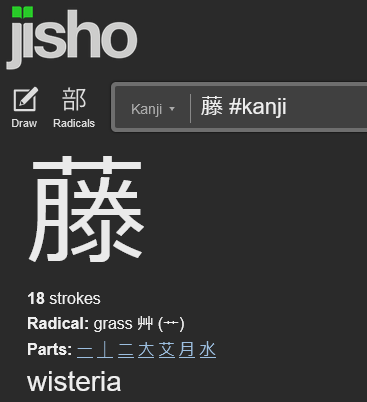
To find kanji components lists online, search for "list of kanji radicals" in English or "部首一覧表" in Japanese. Some online dictionaries like Jisho or JapanDict can also list a kanji's components for you.
While radicals and components are technically different,4 radical lists provide a useful standardized reference of kanji components organized by stroke count.5
Exercise: Breaking down kanji with component trees
For this exercise, you're going to practice breaking down kanji into its components using a tree diagram.
You'll need
- Writing materials (pen and paper or digital equivalent)
- Kanji radical resource (online or offline)
Steps
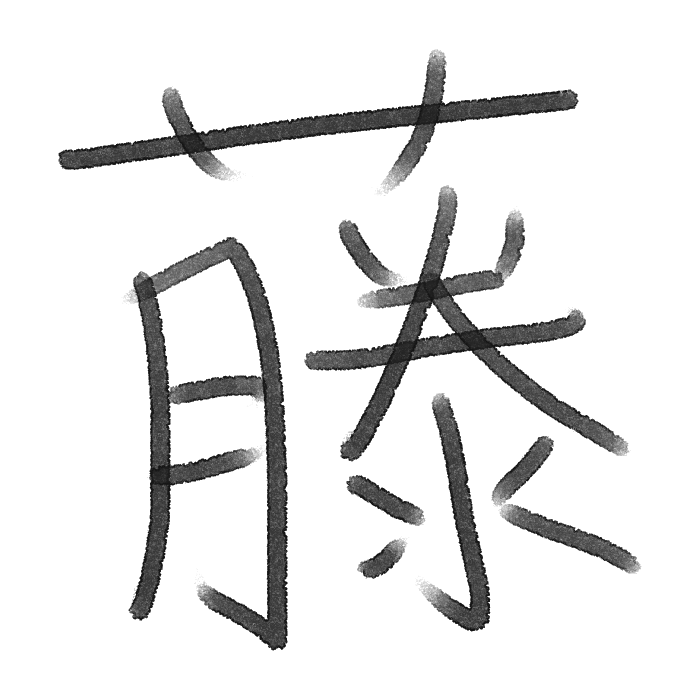
1. Select your kanji
Select and write down one kanji to analyze.
2. Identify its components
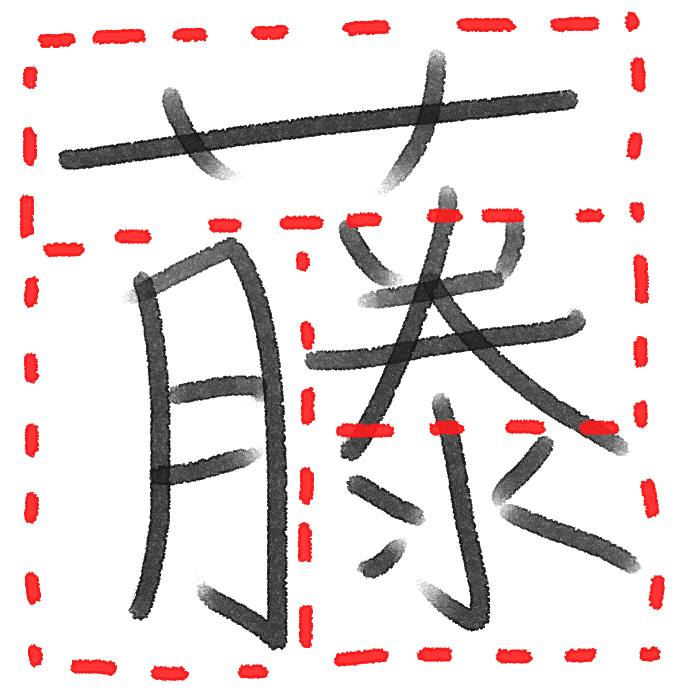
Using your kanji radical resource as reference, identify the components of your selected kanji.
3. Map the components
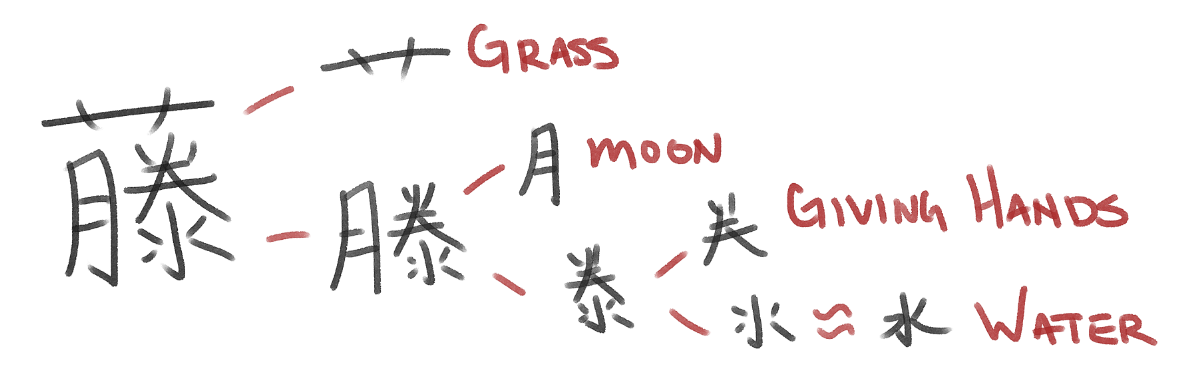
Using a tree diagram, break down and visually map out the kanji's components.
4. Apply the following breakdown methods based on your goals
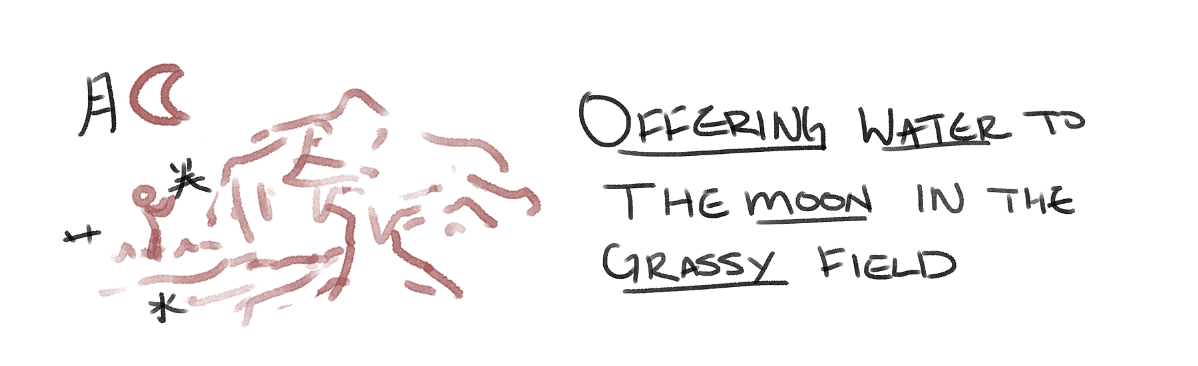
4a. Create a mnemonic using the components to memorize meaning
Kanji radical lists typically provide the meanings of each radical, so you can tie together the meanings of each component to create a mnemonic to remember the structure and components of a kanji.
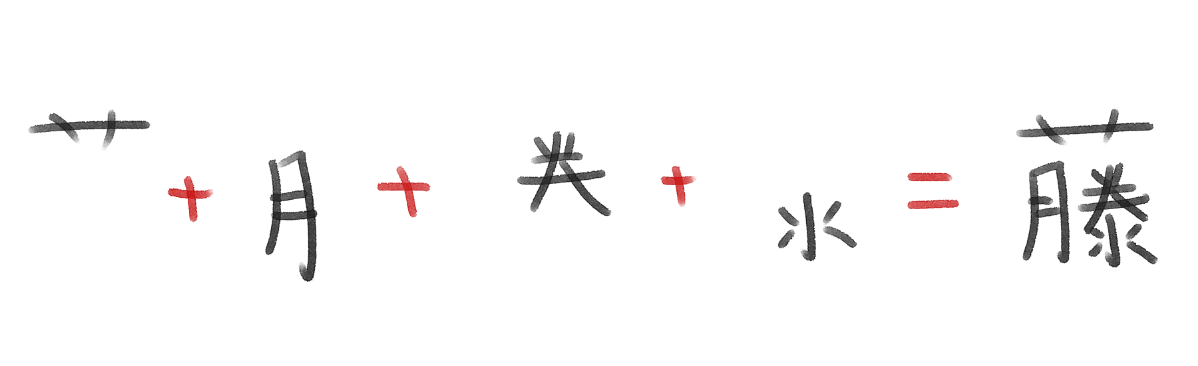
4b. Practice assembling kanji using components
If you have trouble remembering the structure of a kanji, practice writing out its components first then assembling the full kanji.
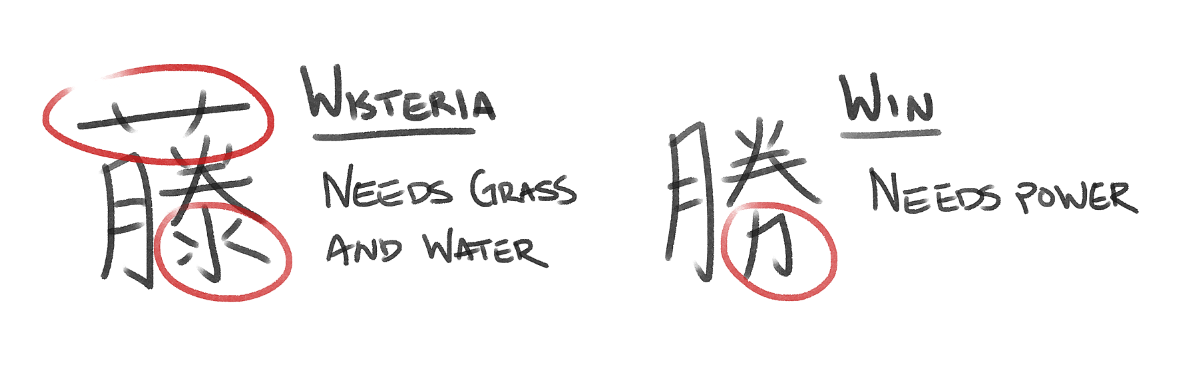
4c. List and distinguish similar kanji using components
If you have kanji you have trouble telling apart, write them side by side and circle components that distinguish them from one another. Then, using the meanings provided in your radical resource, you can memorize the differences between similar looking kanji.
1. The terms “radical” and “kanji component” are often interchangeably used to refer to the visual, phonetic, or semantic components of a kanji. Technically, "radicals" (部首) refer to a singular component of a kanji used to index it in things like dictionaries. On the other hand, "kanji components" (偏旁冠脚) functions as a generic term that can refer to any component of a kanji, not just the one that's used to index it.
2. For more information, see Sidenote: Kanji classes.
3. For more information, see Sidenote: Stroke order.
4. See footnote 1 for an explanation on the differences between a radical and a component.
5. For more information, see Sidenote: Stroke order.